Sacraments of the church
Holy Baptism
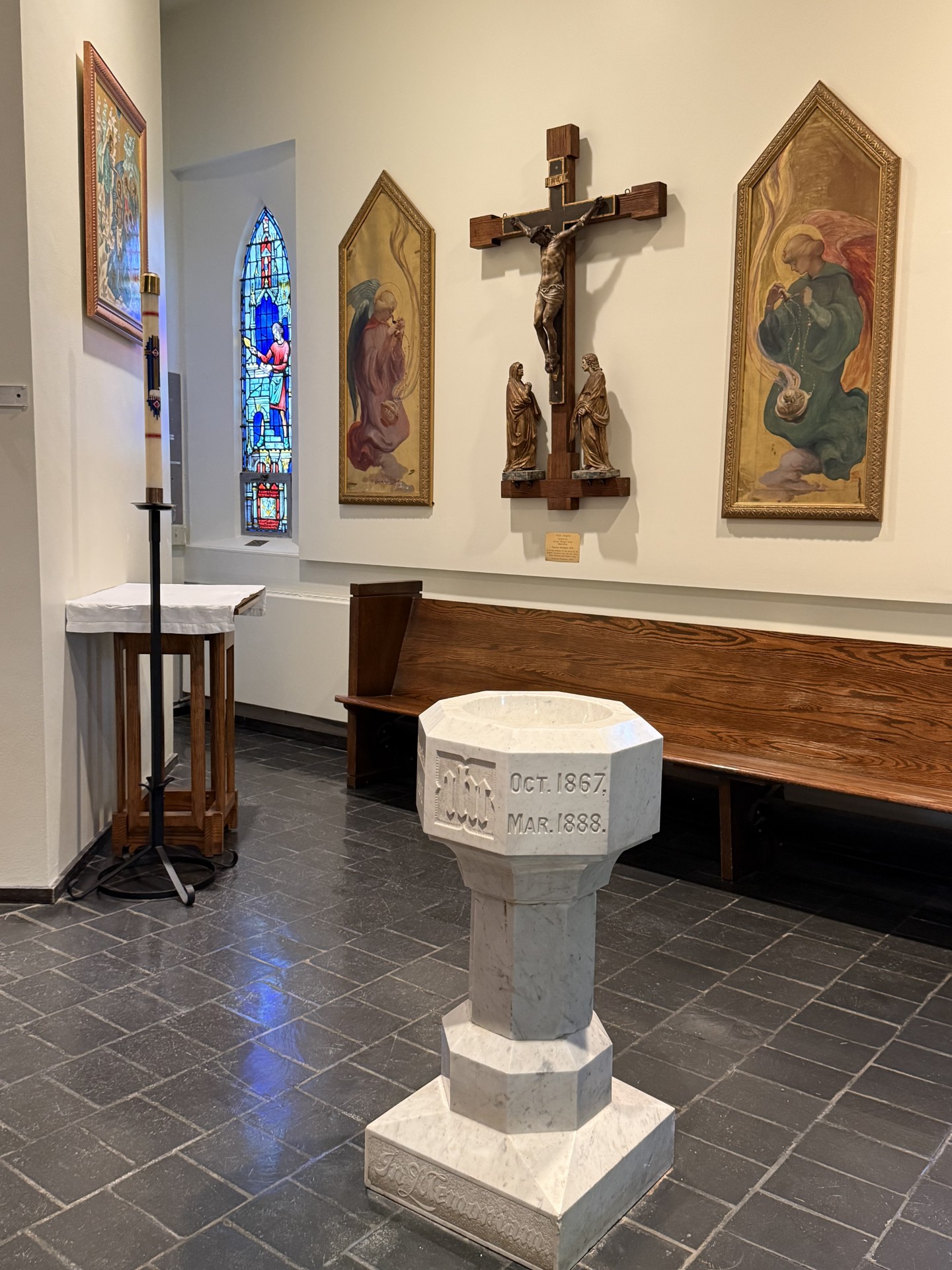
At Saint James, we believe that every person is created in the image of God and deeply loved by God. In Holy Baptism, we celebrate that love made visible. Baptism is one of the two great Sacraments of the Gospel, an outward and visible sign of God’s inward and invisible grace. Through the simple gifts of water and the invocation of the Holy Spirt, God claims us as God’s own, welcomes us into the family of Christ, and begins in us a lifelong journey of faith.
Grace is God’s freely given love, a love that is not earned, deserved, or dependent on our accomplishments. It is the love that seeks us before we ever seek God, the love revealed most fully in Jesus Christ.
In Baptism, we are united with Christ in his death and resurrection and become members of his Body, the Church. We are welcomed into a community where we worship together, grow in faith, serve our neighbors, and learn what it means to follow Jesus day by day. At Saint James, we understand discipleship not as a destination but as a lifelong pilgrimage of growing in God’s love and sharing that love with the world.
Whether you are bringing a child for Baptism or seeking Baptism for yourself, know that this is more than a single day of celebration. It is the beginning of a lifelong relationship with Christ and with the community of faith. We would be honored to walk that journey with you as, together, we continue to be disciples making disciples.
Holy Eucharist
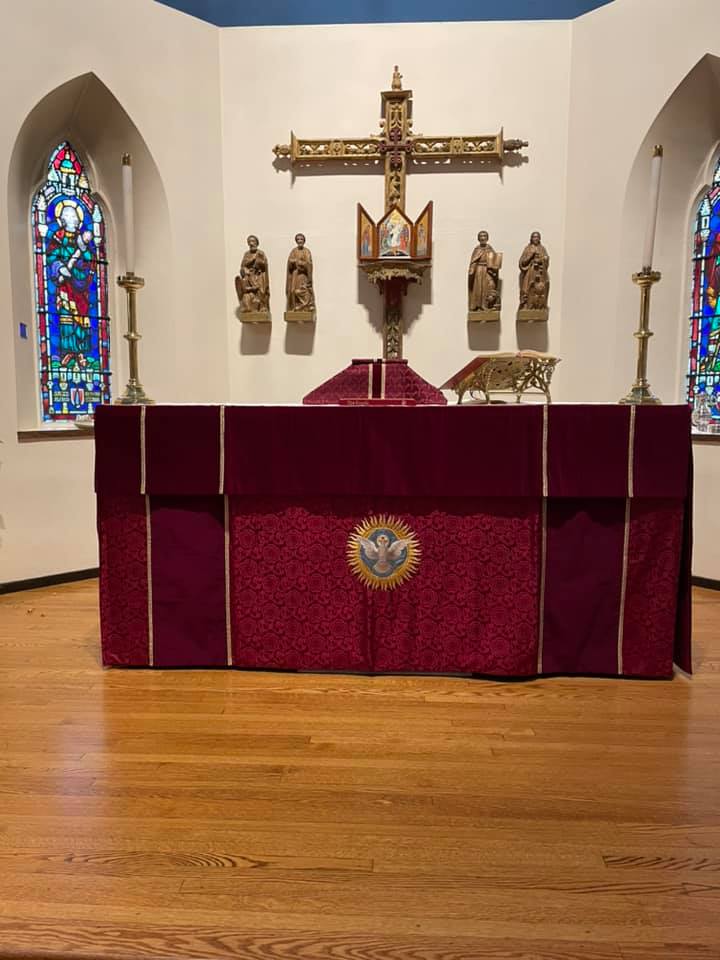
The 1979 Book of Common Prayer teaches that the Holy Eucharist is “the principal act of Christian worship on the Lord’s Day and other major Feasts.” At Saint James, the Eucharist is the center of our life together. Each Sunday, and on other feast days throughout the year, we gather around the Lord’s Table to give thanks, hear God’s Word, and be nourished by the Body and Blood of Christ.
The word Eucharist means “thanksgiving,” and that spirit of gratitude shapes our worship and our lives. When we celebrate the Holy Eucharist, we come into God’s presence with praise and prayer. We listen to the Scriptures proclaimed and preached, pray for the needs of the Church and the world, confess our sins, receive God’s forgiveness, exchange the peace of Christ, and share in the sacred meal that Jesus commanded his disciples to celebrate in remembrance of him.
As Episcopalians, we affirm the Real Presence of Christ in the Eucharist. While we do not seek to explain exactly how Christ is present, we believe that through the power of the Holy Spirit, Jesus truly meets us in the consecrated bread and wine. In this holy mystery, Christ feeds us with his own life, strengthens us for faithful discipleship, and draws us more deeply into communion with God and with one another.
The Eucharist reminds us that the Christian life is not simply about what happens within the walls of the church. Having been nourished at Christ’s Table, we are sent into the world to love and serve the Lord. The dismissal at the end of every liturgy is not merely an ending—it is a commissioning. Strengthened by Word and Sacrament, we leave to share God’s love with our neighbors and to continue the work of Christ in the world.
Saint James is a community that embraces both reverence and joy in worship. We cherish the beauty of Anglican liturgy, the richness of Scripture, the timeless rhythms of prayer, and the mystery of God’s presence among us. We believe that worship forms us into the people God calls us to be, disciples who are continually growing in faith and inviting others to discover the love of Christ.
All baptized Christians are warmly invited to receive Holy Communion at Saint James. If you are not baptized or prefer not to receive Communion, you are still most welcome to come forward during the distribution to receive a blessing. Whether you have worshiped in the Episcopal Church your entire life or are visiting for the first time, we are grateful that you are here and invite you to join us as we gather around Christ’s table.
Confirmation / Reception
The sacrament of Confirmation (from the Latin confirmare, meaning “to strengthen”) is administered by a bishop. During this rite, the one being confirmed reaffirms the promises made at their baptism. The bishop lays hands on the candidate’s head, praying: “Strengthen, O Lord, your servant with your Holy Spirit; empower them for your service; and sustain them all the days of their life.” Traditionally, the candidate is also anointed with chrism, a blessed oil mixed with balsam. This oil signifies strength, and its fragrance reminds us of the “aroma of Christ” (2 Corinthians 2:15).
For those previously confirmed in another Christian tradition, reception into the Episcopal Church is administered through the laying on of hands by the bishop during the rite. If you are a member of St. James and are interested in Confirmation, Reception, or reaffirming your baptismal covenant at a Confirmation service, please contact Fr. Ivan.
Marriage
A wedding is a joyous celebration of two people entering into the sacramental covenant of matrimony before God, their families, and their friends. Within the Episcopal Church, marriage is a sacred rite in which the priest, acting on behalf of the Church, pronounces God’s blessing upon a couple’s union and seeks God’s grace to sustain them throughout their life together, helping them fulfill their vows to one another.
To be married in the Church, at least one person must be a baptized Christian. The marriage must be witnessed by two legal adults and conform to the laws of the Commonwealth of New York as well as the Canons of the Episcopal Diocese of New York.
Can a divorced individual be married in the Episcopal Church? The policies of the Episcopal Church allow for the marriage of a divorced person with the consent of the diocesan bishop.
What about same-sex couples? Yes! Same guidelinelines apply as for eveyone else.
If you have any questions regarding marriage within the Episcopal Church, please feel free to contact Fr. Ivan.
Confession/Reconciliation
“The ministry of reconciliation, which has been committed by Christ to his Church, is exercised through the care each Christian has for others, through the common prayer of Christians assembled for public worship, and through the priesthood of Christ and his ministers declaring absolution.
The Reconciliation of a Penitent is available for all who desire it. It is not restricted to times of sickness. Confessions may be heard anytime and anywhere.
When the penitent has confessed all serious sins troubling the conscience and has given evidence of due contrition, the priest gives such counsel and encouragement as are needed and pronounces the absolution. Before giving absolution, the priest may assign to the penitent a psalm, prayer, or hymn to be said, or something to be done, as a sign of penitence and act of thanksgiving.
The content of a confession is not normally a matter of subsequent discussion. The secrecy of a confession is morally absolute for the confessor, and must under no circumstances be broken.” (Book of Common Prayer 1979, p. 446)
To schedule the sacrament of Confession please reach out to Fr. Ivan Ruiz-Swartz directly: iruiz.swartz@stjamesoneonta.org
Anointing of the Sick
The Anointing of the Sick, also known as Holy Unction, is a sacrament of healing offered through prayer, the laying on of hands, and anointing with oil. This sacred act brings comfort, strength, and God’s grace to those who are ill or in need of healing.
Holy Communion is also available to the sick and homebound. Those unable to attend church regularly may receive Communion at home as part of ongoing pastoral care.
If you would like a pastoral visit or to receive Communion at home, please contact the church office.